History
Tieguanyin was developed during the Qing Dynasty in Anxi, Fujian, China, likely in the early to mid-1800s. It is still primarily grown in Anxi today, and its flavor depends heavily on the specific region and terroir in which it is cultivated.
The tea is named after Guanyin (观音), the Chinese Bodhisattva of Compassion and the Chinese manifestation of Avalokiteśvara. There are two main legends surrounding the tea's origin.
The first is the Wei legend, in which Guanyin appears in the dream of an elderly farmer in Anxi and leads him to a unique tea plant hidden in the mountains. Upon waking, he finds the plant exactly where it appeared in his dream and cultivates it into what eventually becomes Tieguanyin.
The second is the Wang legend, in which a scholar discovers the tea growing beneath a Guanyin Rock in the mountains of Anxi. He presents the tea to the Qing emperor, who comes to admire it greatly, helping it gain recognition throughout China.
Flavor
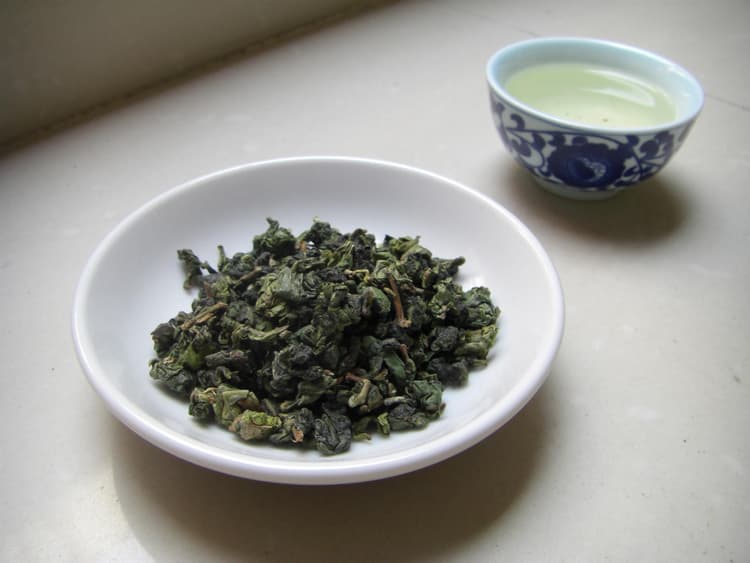
Modern Tieguanyin from Anxi is lightly oxidized, giving it a flavor profile closer to green tea with pronounced floral aromas and subtle fruity notes.
Traditional Tieguanyin, along with Muzha Tieguanyin from Taiwan, is roasted more heavily and oxidized further, producing a richer, nuttier flavor with notes that are closer to black tea.
Brewing
This tea is best brewed gongfu style using 4–5 grams of tea for 100 ml of water at 90–95°C for 10–15 seconds per infusion, increasing the steeping time slightly with each successive brew.
For a Western-style preparation, use 2–3 grams of tea in 250 ml of water at 90–95°C for about 2–3 minutes.
My Thoughts
This is one of my favorite oolongs and, in my opinion, the gold standard for the category. I tend to prefer the modern, lightly oxidized style because of its fresh floral character, although I have probably had more of the traditional variety over the years and enjoy it just as much.