History
Jasmine tea has been produced in China for centuries, with jasmine cultivation and tea-scenting traditions becoming especially established in Fujian. The jasmine plant itself is believed to have been introduced to China from regions to the west, likely through trade routes, although the exact history of its arrival is uncertain.
Jasmine tea is made by repeatedly layering tea with freshly picked jasmine blossoms, allowing the tea to absorb their fragrance. The flowers are then removed, and the process may be repeated several times depending on the desired intensity and quality of the tea.
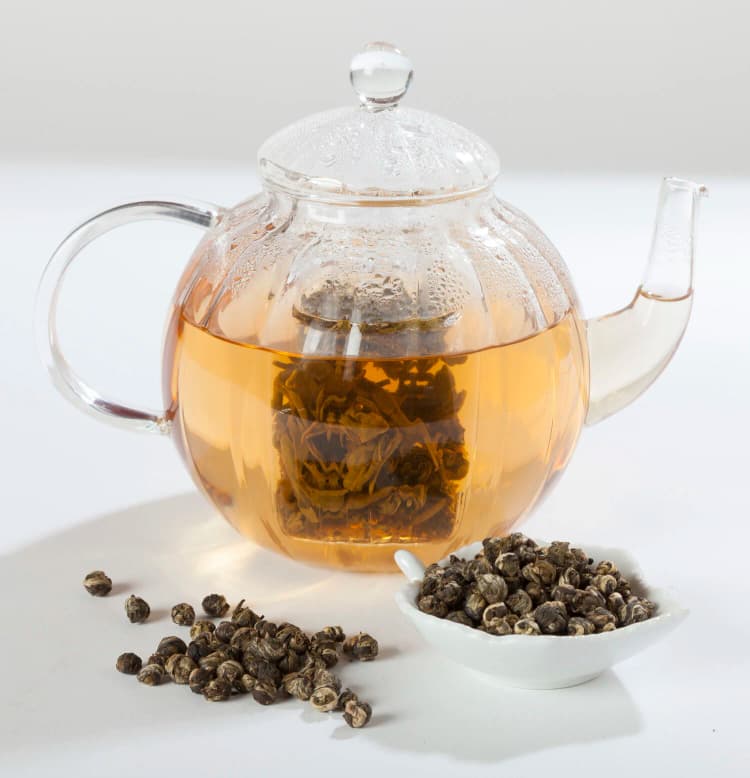
Jasmine pearls are a particularly distinctive style of jasmine tea. The tea leaves are carefully hand-rolled into small, ball-shaped pearls before being scented. This shape helps protect the leaves during storage and allows them to slowly unfurl during brewing. While jasmine pearls are often made with relatively high-quality green tea, the quality can vary considerably between producers.
Flavor
This tea has a strong jasmine fragrance accompanied by other floral notes and a subtle sweetness. Beneath the floral aroma is a green tea base with gentle nuttiness and a light umami character.
The exact flavor of the base tea depends heavily on how it was processed. I would avoid attributing the nuttiness specifically to “roasting,” since many jasmine pearls are made from green teas that are pan-fired or otherwise processed in ways that can create those toasted, nutty flavors.
Brewing
This tea is best brewed Gongfu-style with 4–5 grams of tea per approximately 100 ml of water at 82–85°C. Begin with infusions of around 10–15 seconds, gradually increasing the steeping time as the pearls unfurl and the flavor begins to fade.
For a Western-style brew, use 2–3 grams of tea per 250 ml of water at approximately 80–85°C and steep for 2–3 minutes.
My Thoughts
I find this tea interesting and unique in several ways. Unlike many lower-quality jasmine teas, jasmine pearls are often made with a relatively high-quality green tea, allowing them to be enjoyable on their own rather than serving merely as a vehicle for jasmine fragrance.
However, I still find that the jasmine aroma can overpower the tea to a considerable extent. As a result, I sometimes find the overall flavor a little too mellow and underwhelming compared with more complex teas.
That said, jasmine pearls are extremely versatile. Their strong floral fragrance makes them particularly enjoyable in other drinks, including mocktails and milk teas.