History
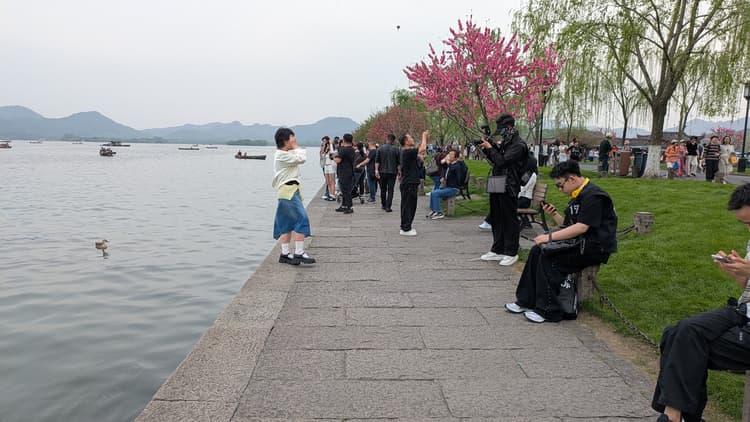
Longjing tea has been cultivated around Hangzhou's West Lake for more than a thousand years. The tea became particularly associated with Buddhist temples and the surrounding mountains, and it eventually gained imperial recognition during the Qing Dynasty. The Kangxi Emperor designated Longjing as an imperial tribute tea, and his grandson, the Qianlong Emperor, later helped make the tea famous through his visits to Hangzhou and his admiration for it.
One of the most famous legends tells that Qianlong was visiting Hangzhou when he received news that his mother was ill. He hurried back to Beijing with tea leaves tucked into his sleeve. When his mother noticed the fragrance of the leaves, he had them brewed for her, and she supposedly recovered after drinking the tea. The story is almost certainly legendary, but it helped cement Longjing's association with the Qing imperial court.
Longjing is famous for its distinctive flat, sword-like leaves. This shape is created through traditional hand-processing and pan-firing, which also gives the tea its characteristic toasted, nutty aroma. Although West Lake Longjing is the most famous version, Longjing-style teas are produced in several regions of China, and the name does not always mean that a tea comes specifically from the protected West Lake production area.
Flavor
Longjing has a toasted, nutty flavor with a slightly grassy character and notes of corn and chestnut. It also has a hint of vegetal sweetness and umami, along with a smooth, buttery mouthfeel. Higher-quality examples can have little to no bitterness, although the tea can become bitter if brewed too hot or for too long.
Brewing
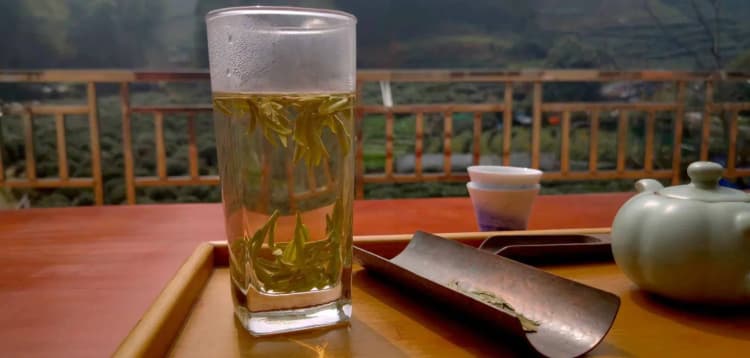
Longjing is traditionally brewed in a clear glass so that the leaves can be appreciated as they unfurl and sink through the water. Use water around 80–85°C.
Place the leaves in the glass and add enough water to cover them. Gently swirl the glass and allow the leaves to absorb the water for several seconds. Then fill the glass with more water at the same temperature and allow the tea to steep until the leaves begin to unfurl and settle. You can continue adding hot water as you drink, adjusting the temperature and steeping time to taste.
Alternatively, you can brew Longjing Gongfu-style using approximately 2 teaspoons of leaves in 80–85°C water. Begin with an infusion of around 20–35 seconds, followed by shorter or longer infusions depending on how quickly the leaves open and how strong you prefer the tea.
My Thoughts
This is my favorite Chinese green tea. It is perfect for a quiet afternoon, and I love its distinctive vegetal umami flavor, which I find uniquely satisfying.
It is also a treat to watch this tea being brewed in a glass. Seeing the leaves slowly unfurl and move through the water makes the brewing process feel almost like a small spectacle in itself.