History
While studying tencha in 1835, Yamamoto Kahei, the sixth head of the Yamamotoyama tea company, discovered that shading tea plants before harvest altered their chemistry, increasing their sweetness and umami. This discovery helped lead to the development of modern shaded teas, including gyokuro and the shaded teas used to produce matcha. The shading techniques used for gyokuro were refined during the following decades, establishing it as one of Japan's most prized teas.
Gyokuro is sometimes described as “unground matcha,” although the two teas are processed and prepared differently. Both are shaded before harvest, but gyokuro is rolled and dried as whole leaves, while tencha is processed specifically to be ground into matcha.
This gyokuro is produced by Kettl, a tea company founded by an American and his Japanese wife. Kettl operates tea spaces in New York and Los Angeles and works directly with Japanese tea producers. The company also has tencha stone mills at its locations for producing matcha.
Flavor
This tea tastes distinctly sea-like, with hints of umami-rich kombu (kelp), dashi (Japanese soup stock), and pine. It also has an almost nutty quality. It is less sweet than some other gyokuros, but still has enough sweetness to balance its powerful umami.
Brewing
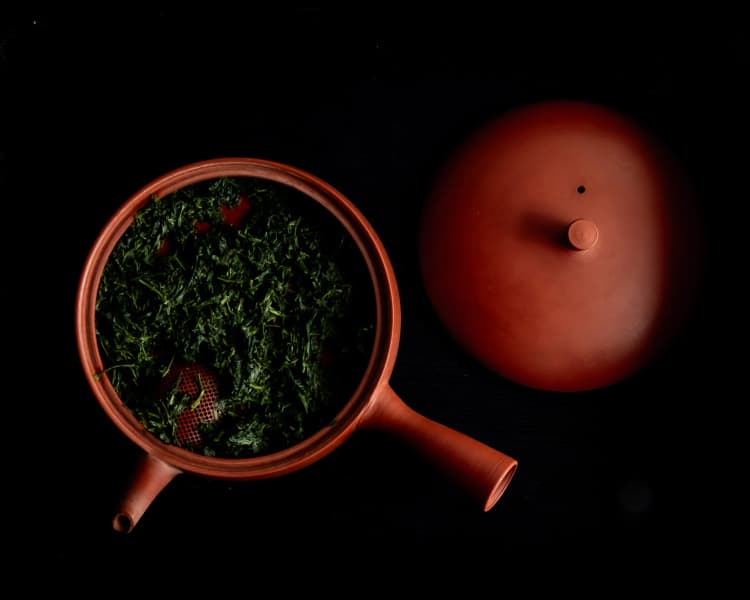
Prepare 10 grams of tea leaves in a kyusu. Pour in 80 milliliters of water at approximately 60°C and steep for about 90 seconds. Gyokuro is often brewed with a high leaf-to-water ratio and relatively cool water, which helps emphasize its sweetness and umami while reducing bitterness and astringency.
My Thoughts
Overall, this is a well-balanced tea: reasonably priced, intensely umami-forward, and still sweet enough to keep the flavor from becoming overwhelming. It has exactly what I look for in a gyokuro: deep umami, some sweetness, and a strong steamed-tea character.
If you are in the Bushwick area of Brooklyn, this is a great tea to try.